Xander Frank · 4 November 2026
How Regulatory Shifts Shape User Acquisition Tactics Across Multi-Platform Online Gaming Networks
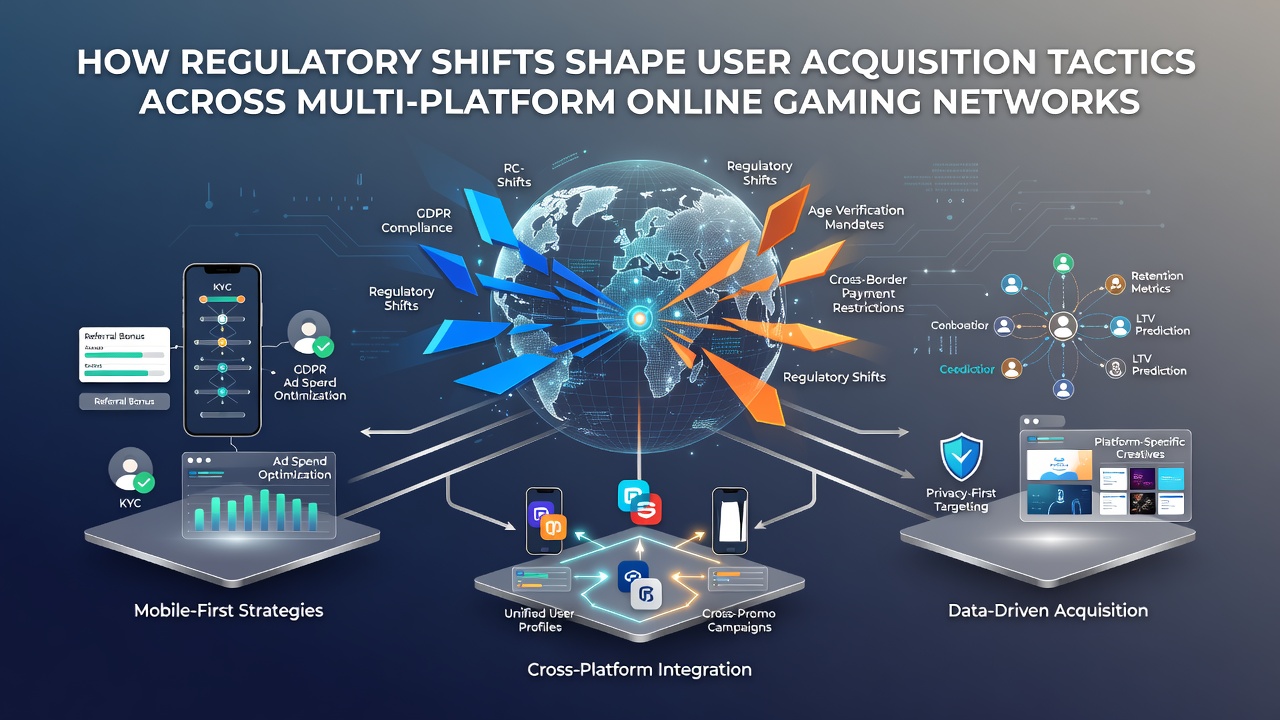
Regulatory adjustments in data privacy and advertising standards continue to redefine how operators acquire users across mobile, desktop, and console-based gaming networks, with compliance requirements forcing revisions to targeting methods and partnership models. Data shows that platforms operating in multiple jurisdictions must navigate overlapping rules on consent and cross-border data flows, which directly affects campaign structures and measurement tools. Researchers have documented cases where companies adjusted their onboarding flows after new consent protocols took effect, resulting in measurable changes to conversion rates during peak registration periods.
Regional Policy Updates and Their Reach
European data protection frameworks have expanded requirements for explicit user consent before personalized promotions, while North American state-level statutes introduce varying thresholds for age verification and data minimization in gaming services. Observers note that Australian authorities have enforced stricter disclosure rules around loot box mechanics and in-app purchases, compelling networks to alter promotional messaging that once relied on behavioral tracking. These shifts create a patchwork where a single campaign might need separate creative sets and tracking pixels depending on the user's location, and figures from industry reports indicate increased spending on legal review processes ahead of launches.
Canadian provincial regulators have also updated guidelines on responsible gaming disclosures, which now extend to acquisition channels such as influencer partnerships and social media ads. Those who've examined compliance filings find that operators frequently segment their user bases earlier in the funnel to apply region-specific rules without disrupting overall growth targets. What's interesting is how these layered obligations push teams to centralize consent management systems that sync across platforms rather than maintaining separate databases for each market.
Adjustments to Data Usage in Acquisition Funnels
With restrictions tightening around third-party cookies and device identifiers, acquisition teams have turned to first-party data collected through in-game events and loyalty programs to maintain targeting precision. Studies from research institutions reveal that networks integrating unified player profiles achieve better retention when regulatory barriers limit external data sources. Platforms must now obtain verifiable consent at multiple touchpoints, including during account creation and before launching targeted notifications, which lengthens the path from impression to registration but reduces later churn from mismatched offers.
Multi-platform operators face additional complexity because console ecosystems maintain their own identity systems separate from mobile app stores, requiring synchronized yet distinct compliance layers. Evidence suggests that companies investing in modular consent architectures see smoother rollouts when new rules emerge, since updates can apply selectively without rebuilding entire pipelines. And because November 2026 marks the scheduled review of several cross-jurisdictional data transfer agreements, planning cycles already incorporate buffer time for potential revisions to these frameworks.
Evolving Advertising and Partnership Approaches
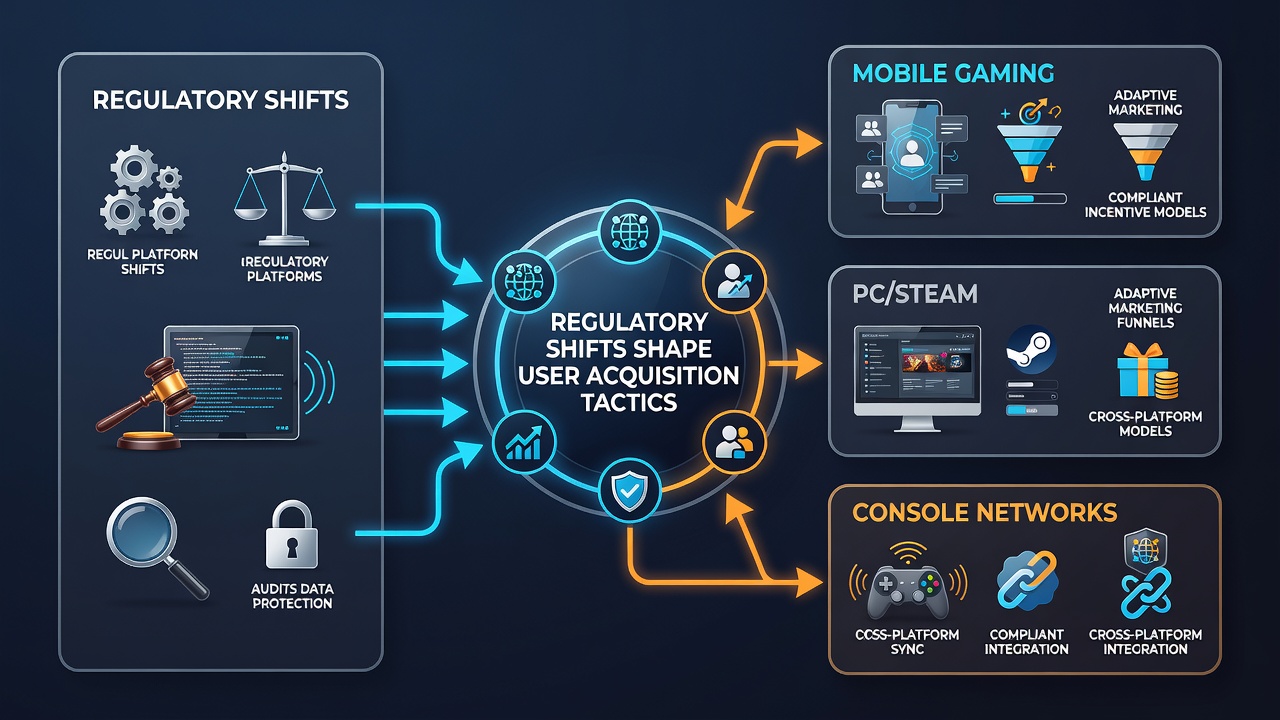
Paid media strategies have pivoted toward contextual placements and broad-match campaigns that avoid reliance on precise behavioral segments, while affiliate and influencer programs now include contractual clauses addressing disclosure and data handling. According to Federal Trade Commission guidance on digital advertising, networks must ensure claims about game features remain substantiated across all promotional materials regardless of platform. Partnerships with streamers and content creators have grown in importance because organic reach often bypasses some paid-ad restrictions, though disclosure rules still apply to sponsored segments.
Those monitoring spend patterns report that budgets allocated to search and video placements have risen as social targeting options narrow, and operators test native integrations within gaming communities to sustain volume. The reality is that measurement frameworks now emphasize incrementality testing over last-click attribution, since privacy rules obscure full user journeys. Platforms that coordinate acquisition across PC, mobile, and cloud-gaming services frequently adopt centralized dashboards to reconcile performance metrics while respecting each channel's data retention limits.
Operational Responses and Measurement Shifts
Engineering teams have built tools that automatically apply geo-specific rules to registration forms and payment flows, reducing manual overrides during rapid regulatory changes. Research indicates that organizations maintaining dedicated compliance roles within growth departments experience fewer campaign pauses when updates occur. Multi-platform networks also explore server-side tracking solutions that keep sensitive identifiers away from client devices, thereby aligning with minimization principles without sacrificing necessary analytics.
November 2026 has surfaced in forward-looking documents as a checkpoint for evaluating the cumulative effect of recent consent reforms on user acquisition costs, with preliminary models projecting continued emphasis on owned channels and community-driven growth. Observers point to examples where networks diversified into emerging markets with lighter regulatory overlays to offset tighter conditions elsewhere, though long-term viability depends on monitoring policy trajectories in those regions as well.
Conclusion
Regulatory evolution continues to influence every layer of user acquisition across interconnected gaming platforms, from initial ad creative development through final conversion tracking. Companies that embed compliance considerations into planning workflows maintain operational continuity while adapting to new constraints on data movement and promotional language. The pattern shows that success stems from flexible infrastructure capable of handling jurisdiction-specific rules without fragmenting the overall player experience. As frameworks undergo scheduled reassessments, operators will likely refine their approaches further, focusing on sustainable methods that balance growth objectives with evolving legal requirements across global markets.